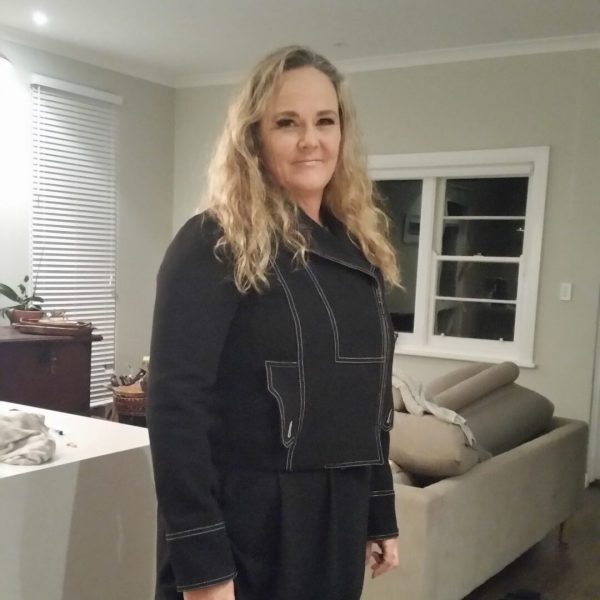
Melanie White, recipient of the HCANZA Coach Advocacy Award in 2024, shares how she got into health coaching, finding a niche, what she loves about coaching and what’s next.
The moment I knew I was in the wrong career, I was sitting at lunch reading Muscle and Fitness while my staff swapped environmental magazines around me.
“Oh!” I remember thinking. “I’m reading Muscle and Fitness, and they’re reading Landscope!”
I had a biology degree with an equal spread of plant, animal and human units, and I’d toyed with a human movement pathway before going down the route of environmental science, co-founding a consulting business. We were successful. But I never felt satisfied or connected to that work.
So over the next four years, I succession-planned out of the business, moved from Perth to regional NSW, and started again as a personal trainer.
PT wasn’t the right fit either. I still didn’t feel a deep sense of job satisfaction or ‘belonging’ to a profession. Then a chiropractor friend mentioned ‘coaching’ to me. I was curious. I researched it. And I found a CPD course offered by Wellness Coaching Australia.
During the training, I had one of those moments where I knew this was exactly what I’d been looking for. I have never looked back.
Finding a niche the hard way
I started out promoting ‘health and wellness coaching’, which of course, nobody understood or wanted. After a difficult six months, I learned my first real lesson: speak your client’s language, not your industry’s.
I leaned into my local audience and what they wanted, and a weight loss program called Downsize Me was born. Within 18 months, it was a six-figure business. That success came from:
- Defining a niche
- Networking with local health practitioners and doctors about my idea
- Gaining a deep understanding of my local audience – pain points and wants
- Partnering with a local bricks-and-mortar health business with an existing client base
- Involving doctors in monitoring my (our) clients
- Being strict in qualifying my clients – who could join and who couldn’t
- Establishing an 8-week program where people committed to making changes: getting more organised, making space to decompress, making time for healthy cooking, and eating whole foods most of the time
Why this work matters
I can think of so many client stories from this stage of my career.
The young man whose lifelong rash disappeared. The 60-year-old who lost 40kg over a year and walked away from her walking frame. The woman whose doctor told her she was no longer type 2 diabetic and could come off medication. The young woman with PCOS who fell pregnant and got her cycle back. And the midlife teacher whose weight loss revealed a lump in her belly – which turned out to be a cancer hidden by belly fat. She had surgery, and survived.
Here’s what I want other coaches to hear in those stories: I didn’t have to do anything to these clients, or worry whether I ‘knew enough’. Those people simply committed to behaviour change and found the strength and courage to make it stick – often from the peers in their group, sometimes from going deeper in 1:1 sessions to explore their limiting beliefs and the identity they wanted to live into.
That’s what coaching does. And that’s why it’s different from most other health professions: we’re not the expert delivering the answer. Our skills lie in providing the conditions under which someone finds their own.
What I love about coaching
Coaching brings together your skills and interests without needing you to be an ‘expert’. The skills transfer across sectors, roles and relationships. Every coach has a unique mix that makes them the right fit for a particular slice of the population.
And the thing nobody warns you about: by doing coaching, you start being it. Your quality of life and your relationships – with yourself and others – improve immeasurably.
The skills that have been most essential for me? I’m a good listener and reflector. I see the greatness in people, which means I hold unwavering belief in the clients I work with (in coaching language, this is ‘unconditional positive regard’). Clients tell me I’m calming, non-judgemental, and ask powerful questions that unlock new perspectives. Perspective sits high on my signature strengths, and I lean on it constantly.
For coaches thinking about what’s next
If you’re considering this path, or already in it and wondering how to grow: get coached yourself. Being coached in 2016 is what showed me I was ready for the next challenge – business coaching – which is a large part of what I do today. You can’t take a client somewhere you haven’t been.
What about the future?
The coaches who move beyond foundational skills into specialty areas and insightful models are the ones who’ll have real impact in what’s coming next.
Because Coaching 2.0 is coming, and the future is incredibly exciting. In the age of AI, siloing and doomscrolling, people need human connection more than anything. They need critical thinking. They need support to grow into their full potential.
That’s our work. And it’s only getting more important.
Other important info re Mel:
Mel is the brains behind ‘Confident Coach Kickstart’, HCANZA’s 6-month business skills program, is designed to help you move quickly from qualified to confident, visible, and earning.
Mel was a HCANZA Board members for two years and is the recipient of the HCANZA Coach Advocacy Award 2024.
Contact Mel via email